
Biodun Jeyifo's Legacy of Activism Inspires Next Generation in Global Struggle
Renowned Marxist intellectual and activist Biodun Jeyifo's enduring legacy of resistance, spanning from the Nigerian Civil War to impactful academic contributions, is celebrated as it seamlessly transitions to inspire a new generation. As cherished comrades reflect on Jeyifo's unwavering commitment, the baton of his rich tradition of struggle firmly passes to those poised to shape the future.
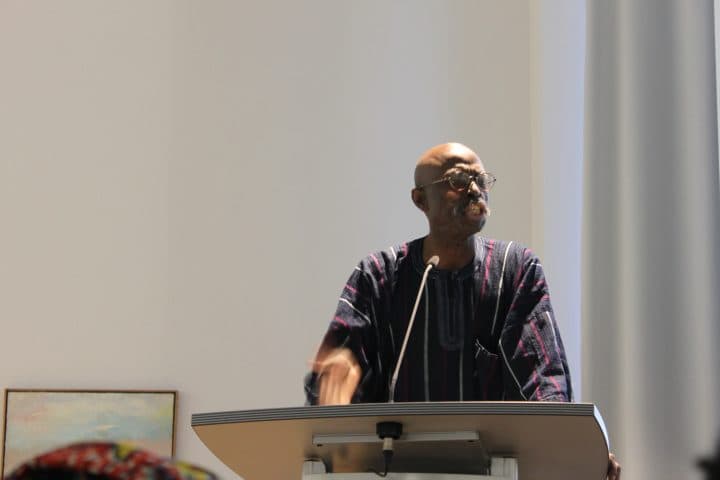
From the crucible of the Nigerian Civil War to a distinguished career in Marxist organizing and academia, the life of Biodun Jeyifo (known colloquially as BJ) symbolizes a steadfast commitment to revolutionary ideals, now entrusted to a new generation. Jeyifo’s legacy is vividly depicted through the recollections of his long-time comrade, Eddie Madunagu, whose health precluded his attendance at a recent memorial for Jeyifo.
Key Facts: Eddie Madunagu, speaking through an intermediary, emphasized BJ's role not merely as a comrade but as a transformative figure who aligned himself with deeply held convictions rather than ethnic or geographic affiliations. Their association, which began amidst the turmoil of the Nigerian Civil War in 1968, marked the beginning of a profound ideological journey. BJ's radical and unapologetic campaign during this era highlighted his commitment to ideological boldness in a climate of fear and suspicion.
Background/Context: Eddie Madunagu's memories trace pivotal moments that defined their ideological camaraderie. Their partnership in the Anti-Poverty Movement of Nigeria (APMON) in the mid-1970s was characterized by debates over the necessity of a revolutionary leap versus gradual reform. BJ's entry into APMON, facilitated by Bene Madunagu, saw his intellectual rigor and moral clarity invigorate the movement's strategies and output. This partnership, forming the Revolutionary Directorate, signaled an enduring camaraderie predicated on shared historical responsibility and ideological discipline.
Implications: Jeyifo's shift into global academia did not dilute his ideological commitments. His work remained intrinsically bound to the principles of Marxism-Leninism, understanding literature and culture as entities intertwined with class struggle. Eddie Madunagu emphasized the need for current and future generations to learn from, yet critically transcend BJ’s and his comrade’s legacy. He warned against romanticizing their achievements, instead advocating for a critical assessment and surpassing their endeavors to face contemporary challenges.
For many, BJ represents a blueprint of ideological commitment that serves as a touchstone for ongoing debates on systemic inequality and societal transformation. The questions of whether to pursue incremental reforms within existing structures or to radically challenge those frameworks persist, echoing the debates that fueled BJ's activism.
Closing Statement: Standing as a testament to their shared ideological pursuit, Madunagu implores the younger generation to continue BJ's mission. “If we wish to honor BJ,” he asserts, “we must not merely praise him. We must organize. Study. Debate. Act.” Despite the physical absence of BJ, his ideals remain potent, challenging us to uphold the struggle against socio-economic injustices.
BJ’s enduring influence beckons us to navigate the complex socio-political landscape with clarity and courage, advancing towards a liberated society. As Eddie Madunagu poignantly articulates, “The journey that began in 1975 did not end with his passing. It continues— in us.”